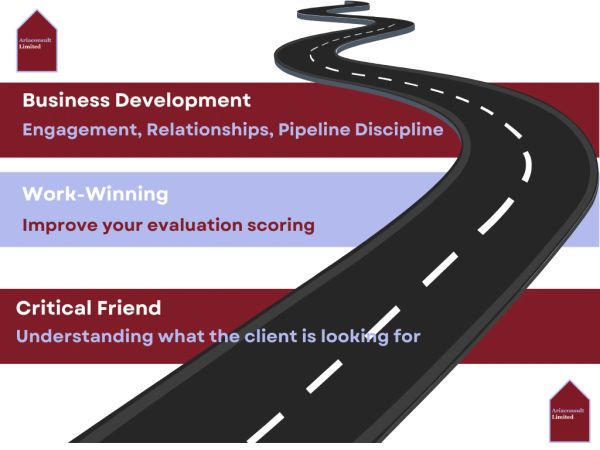
The Three Pillars of Ariaconsult

Business Development
Business Development
Business Development
Effective business development in highways doesn't start when a tender is issued. It begins with early engagement, honest positioning, and, at times, assisting the authority in designing the process itself before a single bid is submitted.
Work-Winning
Business Development
Business Development
Winning work in this sector isn't about submitting longer bids. It's about understanding exactly how evaluation panels score, where the real marks are, and developing a capture plan and submission that reflect that, not what you assume it looks like from the outside.
Critical Friend
Business Development
Critical Friend
Every business, no matter how resilient, has blind spots. A critical friend is someone who is invested in your success and willing to tell the uncomfortable truth before a client or evaluator does, whether that's reviewing your bid or informing an authority about their own procurement reality.
Business Development
Horizon Scanning
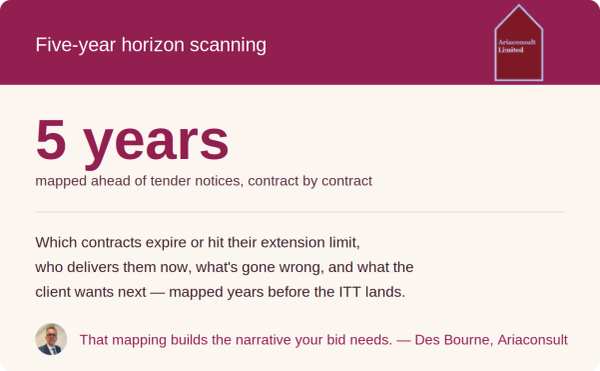
Many businesses in this sector still wait for the tender notice to emerge before working backwards from a specification, which encourages generic, copy-and-paste bids rather than those that genuinely suit the client. I collaborate with a term maintenance contractor and several specialist contractors to survey a five-year horizon: which local authority contracts are due to expire or have reached their maximum extension, who currently manages them, what has gone wrong under the current arrangement, and whether the client is considering a different operating model altogether. That mapping, completed years before any formal engagement, allows a contractor to start building the right relationships and crafting the appropriate narrative, one that genuinely aligns with the client’s intended changes, not just a rehash of previous successes.
Bid or no bid decisions
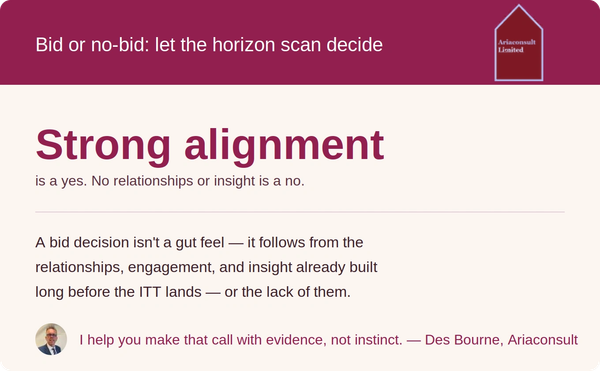
That same horizon-scanning work should also guide the decision to bid, rather than relying on a gut feeling once the ITT arrives. Once relationships, engagement, and understanding of what the client wants are established, a bid decision becomes straightforward: yes. When none of that exists—no relationship, no engagement, no genuine understanding of what the client is seeking—the honest answer is no, no matter how appealing the opportunity seems on paper. Viewing bid/no-bid as the result of groundwork already completed, rather than a reaction to a published notice, helps a contractor's win rate and growth stay aligned with their true strengths.
Work-Winning
Understand bid mechanics
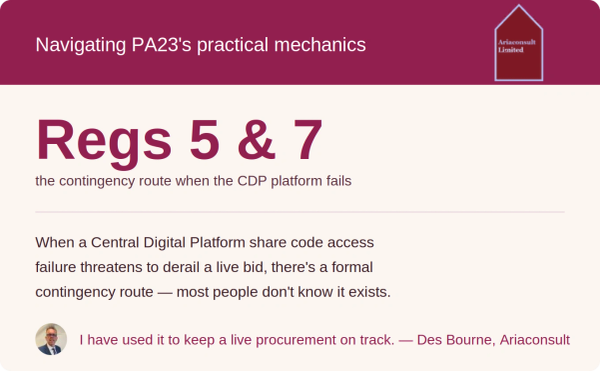
The Procurement Act 2023 didn't just revise the old rules; it replaced them with two evaluation methods that most highway contractors and authorities are still trying to understand. The Most Advantageous Tender (MAT) approach considers both quality and price, while the Price Per Quality Point (PPQP) makes that balance explicit and numeric. I have developed both methodologies from the ground up and participated in the evaluation panel as they were applied, providing a different perspective from just reading the guidance.
Facilitating a flying start
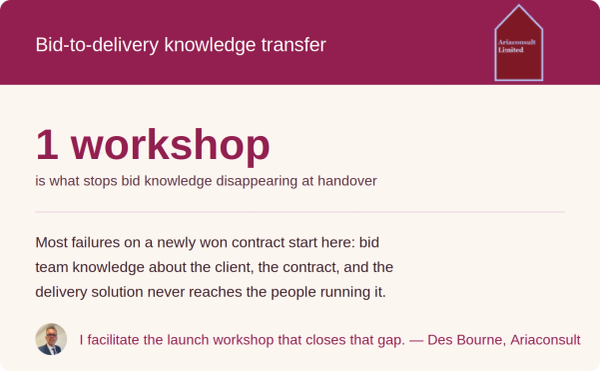
Securing the work is only the first step. I assist successful contractors in transferring bid team knowledge to their operational and commercial delivery teams. I facilitate partnership launch workshops that bring together a new client service team and contractor mobilisation teams to launch a new contract. I also support day-to-day NEC contract administration for Options A, C, and E, as well as the Term Service Contract, including early warning notices, compensation events, and payment mechanism disputes. This stage of the lifecycle often receives the least attention in business development discussions, yet it can pose the greatest commercial risks.
Critical Friend
Honest feedback
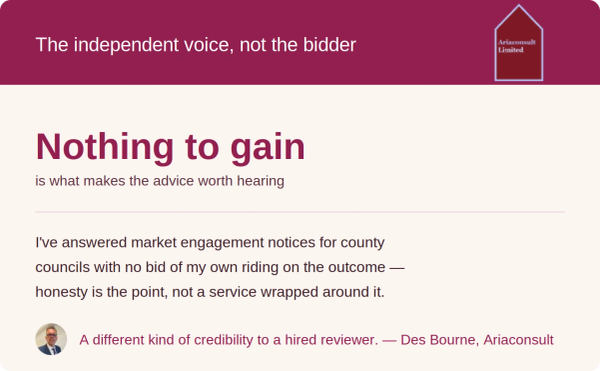
Being a critical friend doesn't always mean reviewing your bid; sometimes it involves giving honest feedback to the other side of the table, with nothing to gain from the outcome. I've responded to market engagement notices for county councils shaping a future Mixed Economy Highway Repair and Patching Service and a Term Maintenance Contract, each time as an independent industry voice with no bid of my own riding on the answer. That offers a different kind of credibility from being a hired reviewer; it shows that honesty takes priority over self-interest.
Independent review
I act as an independent reviewer for bids, proposals, and strategic submissions, rigorously testing the narrative, honing the value proposition, and assessing the response as an evaluation panel would, not as it was meant to be read. I also help clients learn from unsuccessful submissions, identifying the specific gaps that cost marks, so their next bid avoids repeating them. Sometimes, the most valuable thing I can do is tell you the thing nobody else on your team is willing to say.